Car tinting in Ottawa, dark where it can be
Car window tinting is the most common job in the shop, and the one with the most rules attached. The back of your car can go as dark as you like. The front has to stay inside Ontario's limits. Getting both right, with film that goes on clean and stays that way, is the whole job.
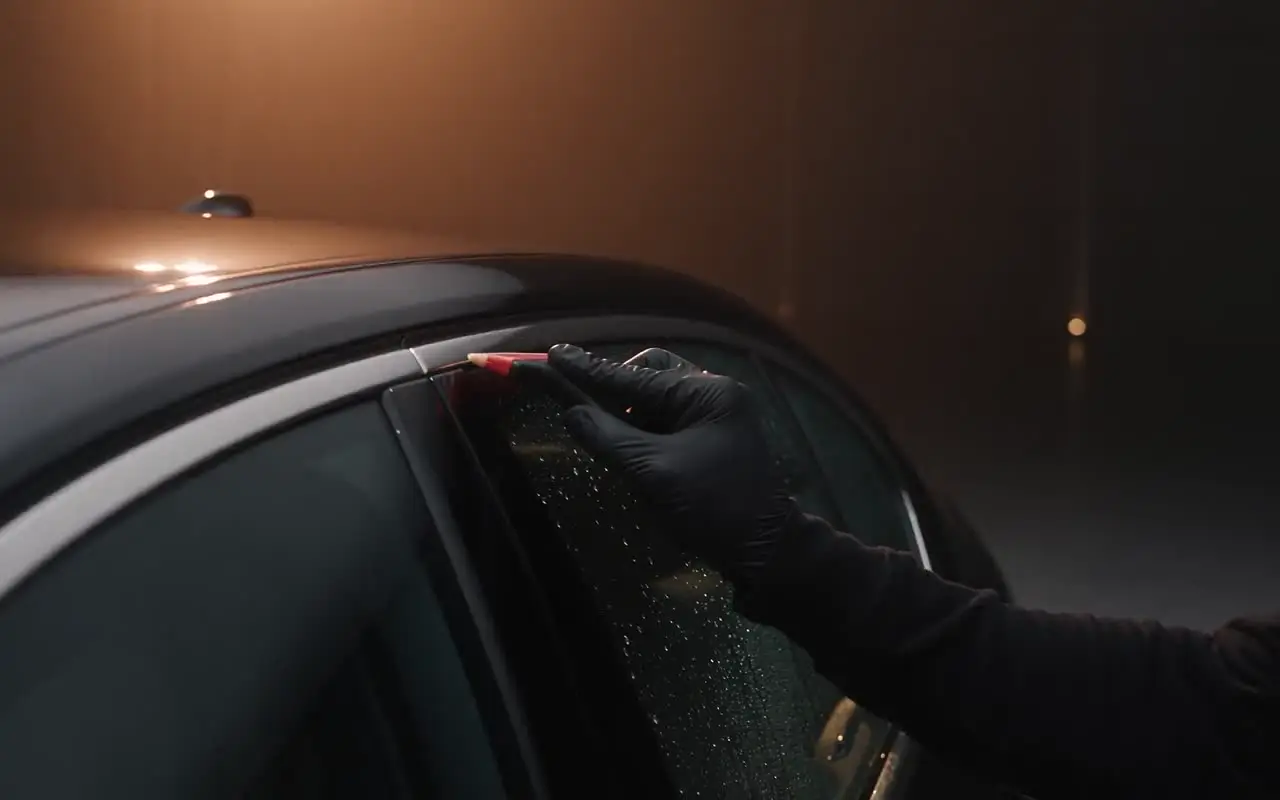
At a glance
- Takes
- Two to four hours for most cars
- Where
- Indoors, in a warm, clean bay
- Films
- Carbon, ceramic and clear ceramic
- Ontario rules
- No limit behind the driver; 70% at the front on 2017+
- Windows down
- After three to four days, longer in the cold
Why people tint their cars, and what car tint actually does
Ask ten Ottawa drivers why they want car tinting and you will hear the same handful of answers: it looks better, the kids in the back are not squinting, the car is not an oven when it has sat in a parking lot in July, and nobody can see the laptop bag on the back seat. All four are good reasons, and a good film does all four at once.
What a car window film physically does is simple. It is a sheet of polyester a few hundredths of a millimetre thick, laid on the inside of the glass with an adhesive. Depending on how it is made, it absorbs or reflects part of the visible light, part of the infrared, and almost all of the ultraviolet that comes through the window. Less visible light means more privacy and less glare. Less infrared means less heat. Less UV means less fading on the seats and dashboard and less sun on your skin.
Factory glass already does a little of this. Your windshield is laminated glass, which blocks most UV. The rear side windows and back glass of most SUVs, minivans and pickups are "privacy glass", tinted in the glass itself. What factory glass usually does not do is stop much heat, and the front side windows of almost every car are left nearly clear. That is where film comes in.
It is also worth saying what car tint does not do. It will not make a car cold on a 32-degree day; it makes the air conditioning's job easier. It does not stop someone determined from breaking a window, though it does make the glass hold together better when it breaks. And it does not make an illegal shade legal because it is "only a little bit" darker. Those three come up in nearly every conversation, so it helps to have them out of the way first.
Car tinting and Ontario law
There are two rules, and they work differently. Section 73 of the Highway Traffic Act, which police enforce at the roadside, says you may not drive with the windshield or the windows directly beside the driver coated with coloured or reflective material that substantially obscures the inside of the vehicle when seen from outside. There is no percentage in it. An officer decides, and it applies to every vehicle on the road.
The Ministry of Transportation's vehicle inspection standard, which decides whether a used vehicle passes its safety inspection, does give a number. For vehicles built on or after January 1, 2017, at least 70% of light has to get through the windshield and front side windows. A windshield sun strip is allowed in the top 75 mm, or down to the line marked on the glass.
Behind the driver, Ontario sets no limit at all. The rear side windows and the back glass can be as dark as you like, as long as the vehicle has outside mirrors on both sides. That is why the classic Ottawa setup is a dark shade on the back, and a light film, a clear ceramic or nothing on the front. Try the shade preview or the Ontario tint check on the main page for your own vehicle.
The rules for car tint in Ontario
- Windshield
- No tint across the driver's view. Sun strip only in the top 75 mm or down to the marked line on 2017 and newer vehicles.
- Front side windows
- Must not substantially obscure the interior. On 2017 and newer vehicles, at least 70% light transmission for a safety inspection.
- Rear side windows
- No limit.
- Back glass
- No limit, with outside mirrors on both sides.
- Reflective film
- Mirror finishes on the windshield or front side windows fall under the same rule as coloured film.
A plain-language summary of the Highway Traffic Act, s. 73, and the MTO inspection standard. Not legal advice.
Ontario tint check
Is this window legal?
Three taps: the year of the vehicle, the window and the film.
The vehicle
The window
Film, light through
Shades, and what they look like on the road
Window film is sold by the percentage of visible light it lets through, called VLT. The lower the number, the darker the film. These are the shades most Ottawa drivers choose between.
Carbon or ceramic: which car tint film to choose
The shade is only half the decision. What the film is made of decides how much heat it stops, how long it keeps its colour, and whether it gets along with your phone and GPS. Dyed and metallized films exist too, but these two cover what most drivers want.
| Carbon film | Ceramic film | |
|---|---|---|
| Look | A deep, matte, true black | Neutral black, very clear to look through |
| Heat | Better than dyed film | The most heat stopped for a given shade |
| Colour over time | Stable, does not turn purple | Stable, does not turn purple |
| Signals | No metal, no interference | No metal, no interference |
| Best for | Looks and privacy at a lower price | Heat, comfort and long drives |
| Front windows | Only in light shades | Available nearly clear, for heat without darkness |
General characteristics. Each film's exact heat rejection and UV figures are on its maker's specification sheet. More on [[ceramic tint|ceramic-tint-ottawa]].
How a car is tinted
A good tint job is mostly preparation. The film itself goes on in minutes. Getting the glass perfectly clean and the film cut and shaped to fit is what takes the time.
Check and agree
The car is looked over, the shades are chosen against your actual glass, and any existing film or damage is noted. You are told exactly which windows get which film.
Clean the glass
Inside glass is scrubbed and scraped to the edges, including under the door seals, because a single speck of dust becomes a visible bump under film.
Cut to fit
Film is cut to the shape of each window, either by hand on the glass or from a computer pattern for that model, with a small gap at the edges.
Shrink the curves
Back windows curve in two directions. The film is laid on the outside of the glass and heat-shrunk with a heat gun until it matches the curve exactly.
Lay and squeegee
The film goes on the inside with a slip solution so it can be positioned, then is squeegeed from the centre out until no water or air is left.
Edges and checks
Edges are sealed and checked with light from several angles. Door windows are left up, and you leave with the aftercare in writing.
Why the back glass takes the longest
Front and rear door windows are fairly flat and come off quickly. The back glass is the hard part of every car. It is curved in two directions, it has defroster lines printed on the inside, and on many cars it sits at a shallow angle under a third brake light and a rear wiper. A single sheet of film has to fit all of it without a crease.
That is done by shrinking. The film is laid on the outside of the glass, which acts as a mould, and warmed with a heat gun until the excess bunches and shrinks flat. It is then trimmed, cleaned and moved to the inside. Done well, you cannot see where the shrinking happened. Done badly, you see "fingers" of lifted film along the edges and lines across the defroster.
The defroster deserves a word on its own. Film goes on over the lines and does not stop them working. The risk is in removal: old film pulled off cold and fast can tear the lines with it. When old tint has to come off, it is softened with steam and taken off slowly.
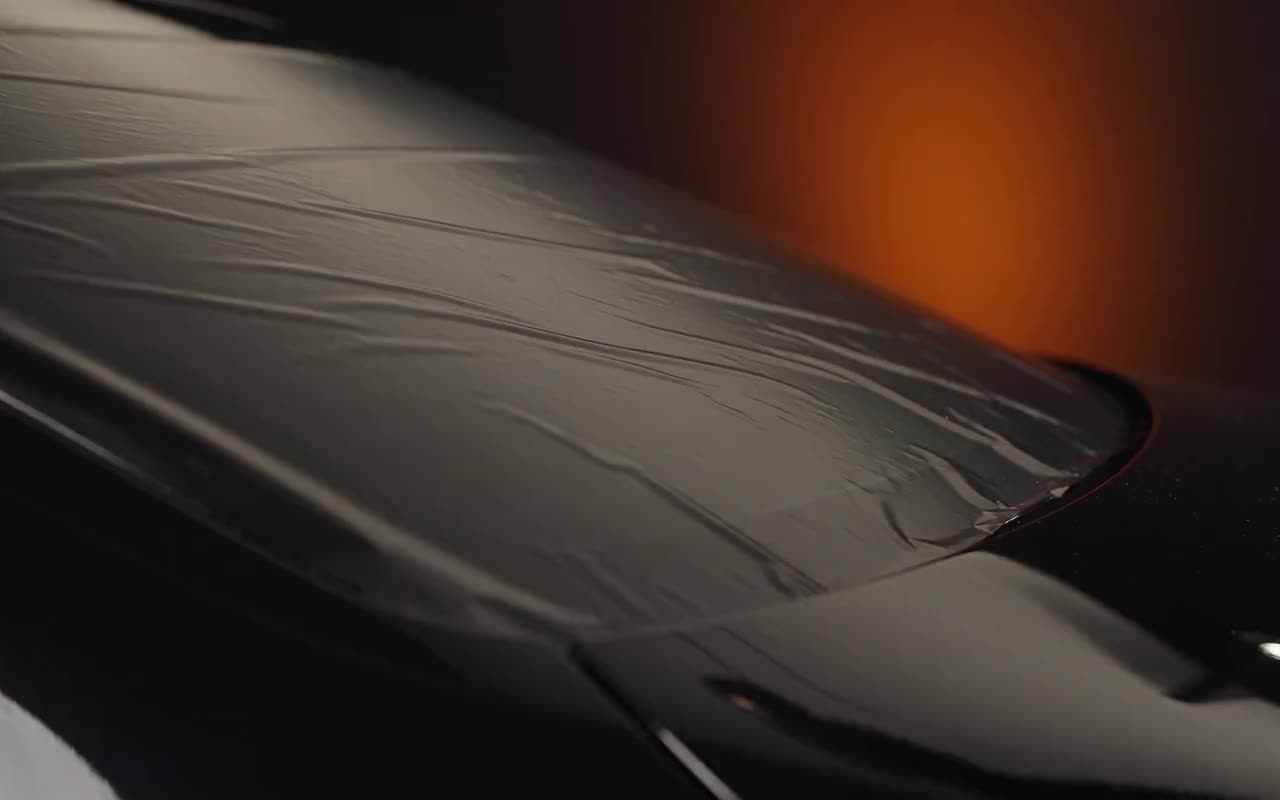
Car window tinting for every kind of vehicle
The process is the same, but every body style has its own quirks. These are the ones that come up most in Ottawa driveways.
Car tinting in an Ottawa winter
Car tinting is often thought of as a spring job, but it is done all year in Ottawa, indoors, in a warm bay. The film and the adhesive need the glass to be at room temperature when it goes on, and that is easy to arrange inside. A car that comes in from minus fifteen is simply given time to warm up first.
The difference in winter is the curing. Window film is laid on wet, and the water left under it has to evaporate through the film. In July, with the sun on the glass, that takes a few days. In January it can take two weeks or more. Until it is done, the film can look a little hazy and show small water pockets, and the windows should stay up so the edges are not caught.
In practice that means a winter tint is best followed by a week in a garage, or at least not using the windows. If you need to use a drive-through or pay a parking meter, open the door instead. Try the cure countdown for the date your windows can safely go down.
Winter also brings ice scrapers, and they are the most common way film gets scratched. Film goes on the inside of the glass, so scraping the outside is always safe. The risk is the inside of the glass, where frost forms on a cold morning. Use the defroster for that, not the scraper.
What to ask before you book car tinting
Window tint prices in Ottawa vary a lot, and so do the jobs behind them. A few questions will tell you most of what you need to know about any shop, including this one.
Ask what film it is, by brand and line, and what shade on which windows. Ask whether the front windows will meet the 70% inspection standard if your car is 2017 or newer, and get it in writing if it matters to you, for example if you plan to sell the car. Ask what the film maker's warranty covers, and whether it is registered to you. Ask how the back glass is done: one piece, shrunk to fit, or several pieces joined. And ask what happens if a bubble, a lifted edge or a speck of dust shows up after it cures.
At Ottawa Window Tinting you get the film, the shades by window and the price before any work is booked, and you are told plainly if a shade you ask for will not pass inspection on your car. If you want to see how a shade looks first, the shade preview on the main page is a good start, and the real samples are shown against your own glass when you come in.
Questions people ask
How much does car tinting cost in Ottawa?
It depends on the vehicle, the number of windows and the film. Carbon film costs less than ceramic, and a sedan has fewer windows than a three-row SUV. Call 613-851-7831 with the year, make and model and you will get an exact price before anything is booked.
How long does it take to tint a car?
Most cars take two to four hours. A coupe or a sedan with only the rear windows done is quicker; a full SUV with a sun strip takes longer.
What is the darkest legal tint in Ontario?
Behind the driver there is no limit, so any shade, including 5%, is legal on the rear side windows and back glass as long as the vehicle has outside mirrors on both sides. On the front side windows of a 2017 or newer vehicle, at least 70% of light must pass of light transmission to pass a safety inspection.
Can I tint my front windows in Ontario?
Yes, with a light film. On older vehicles there is no percentage, but the film must not substantially obscure the inside. On 2017 and newer vehicles, the windows must let at least 70% of light through to pass inspection, which usually means a clear or very light ceramic.
Will tint affect my phone or GPS?
Carbon and ceramic films contain no metal and do not interfere with phone, GPS, radio or toll transponder signals. Some metallized films can.
Why is my new tint hazy or bubbly?
That is water still under the film. It evaporates through the film over the first days or weeks, faster in warm weather. Leave it alone and it clears. A bubble that is still there after a month should be looked at.
Can you tint over factory privacy glass?
Yes. Film on top of dark factory glass makes it darker still, so many drivers choose a clear or light ceramic there for heat control without losing visibility at night.
More from Ottawa Window Tinting
For the full picture, from Ontario's tint rules to the types of film, see the main page for window tinting in Ottawa, or go straight to a service.
Tell us what you want to tint
613-851-7831Call for the quickest answer, or send the form. You will get a call back with a recommendation, the film options and a price.